Hindu Festival · 2028 · All Years Guide
Diwali (Deepavali) 2028
The Festival of Lights, celebrating the victory of light over darkness.
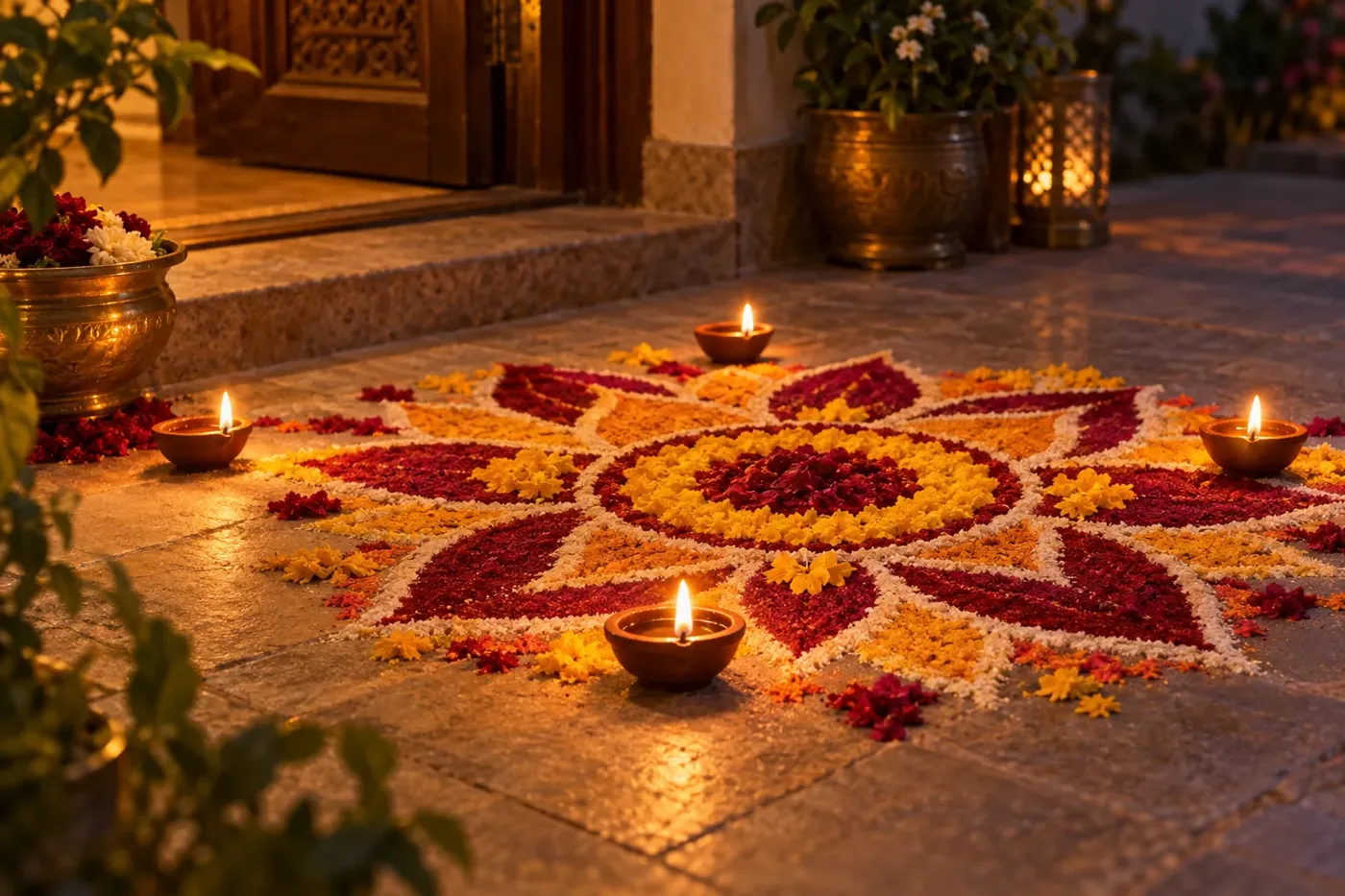
In 2028, Diwali (Deepavali) falls on Tuesday, October 17, 2028. Regional panchang authorities — including the Vakya, Drik, and Surya Siddhanta traditions — may calculate the precise tithi differently, with some communities observing the festival one day earlier or later than the date shown.
Significance of Diwali (Deepavali)
Diwali, also spelled Deepavali, is the most widely celebrated festival in the Hindu calendar and one of the largest cultural festivals in the world. The name derives from the Sanskrit dipavali, meaning a row of lights. The festival falls on the night of the new moon (amavasya) of the Hindu lunar month of Kartika and stretches into a five-day celebration. The most popular legend connected to Diwali is the return of Lord Rama to Ayodhya after fourteen years of exile and his victory over the demon king Ravana in Lanka, an event the citizens commemorated by lighting clay lamps to dispel the darkness. South Indian traditions emphasize Krishna's defeat of the demon Narakasura, while in Bengal the festival is associated with the worship of Goddess Kali and in Jainism with the attainment of moksha by Mahavira.
Traditions and Observances
Households are cleaned and decorated weeks in advance, financial accounts are closed and reopened on Lakshmi Puja, and elaborate rangoli designs are drawn in colored powders, flower petals, or rice flour at every doorway. The five days are observed sequentially as Dhanteras (worship of Lakshmi and the purchase of metal vessels), Naraka Chaturdashi or Chhoti Diwali, the main Diwali night with Lakshmi Puja and the lighting of diyas, Govardhan Puja or Annakut, and Bhai Dooj for the bond between sisters and brothers. Sweets including kaju katli, gulab jamun, ladoo, and barfi are exchanged with neighbors, new clothes are worn, and homes are illuminated with strings of electric lights, oil lamps, and candles.
Diwali (Deepavali) 2028 — At a Glance
If you are planning travel, scheduling community events, requesting time off work, or simply marking your family calendar for 2028, the table below summarises every key detail for Diwali (Deepavali) this year, alongside the surrounding observances on either side of the festival in the Hindu lunar calendar.
| Detail | 2028 |
|---|---|
| Gregorian date | October 17, 2028 |
| Day of week | Tuesday |
| Panchang reference | Amavasya of Kartika |
| Tradition | Hinduism (regional variations across panchang traditions) |
Regional Observance
In North India the festival celebrates Rama's return; in West Bengal and Odisha it honors Goddess Kali in Kali Puja; in Maharashtra it includes the unique Vasubaras observance for cattle; in Gujarat it serves as the Hindu New Year with Bestu Varas; in Tamil Nadu it is largely centered on Naraka Chaturdashi morning rituals. The Sikh community observes Bandi Chhor Divas on Diwali to mark Guru Hargobind's release from imprisonment in 1619. Jain communities mark Lord Mahavira's attainment of nirvana. The Buddhist Newar community of Nepal observes Swanti or Tihar with Kukur Tihar (worship of dogs), Gai Tihar (cows), and Bhai Tika.
Diwali (Deepavali) Across the Years 2024–2030
The Islamic Hijri calendar is a purely lunar calendar of approximately 354 days, so its observances drift forward by roughly 10–11 days each Gregorian year. The Hindu lunar calendar uses periodic intercalary months (adhik maas) that keep festivals broadly anchored to the seasons. The table below shows the Gregorian date of Diwali (Deepavali) across every year Festive Dates covers, allowing you to plan multi-year commemorations, anniversaries, or research at a glance.
| Year | Gregorian date | Day |
|---|---|---|
| 2024 | November 1, 2024 | Friday |
| 2025 | October 21, 2025 | Tuesday |
| 2026 | November 8, 2026 | Sunday |
| 2027 | October 29, 2027 | Friday |
| 2028 | October 17, 2028 | Tuesday |
| 2029 | November 5, 2029 | Monday |
| 2030 | October 26, 2030 | Saturday |
How Festive Dates calculates Diwali (Deepavali) 2028
Our Hindu festival dates are compiled from the Drik Panchang almanac authority, cross-checked against regional panchang publications including the Mahesh Dharmik Panchang and the Indian government's National Calendar. For festivals tied to specific tithis, nakshatras, or yogas, the date listed corresponds to the day on which the festival is most widely observed in North India under the Drik tradition. Tamil Nadu, Kerala, and parts of Karnataka follow the Vakya tradition that may shift the observance by a day. Bengal's Vishuddha Siddhanta and the lunisolar calendars of Maharashtra and Gujarat occasionally differ. Always confirm with your family priest or local temple before finalising ritual plans.
Other Years
- Diwali (Deepavali) 2024 Nov 1, 2024
- Diwali (Deepavali) 2025 Oct 21, 2025
- Diwali (Deepavali) 2026 Nov 8, 2026
- Diwali (Deepavali) 2027 Oct 29, 2027
- Diwali (Deepavali) 2029 Nov 5, 2029
- Diwali (Deepavali) 2030 Oct 26, 2030
Other Holidays in October 2028
- Karva Chauth 2028 Oct 7, 2028