Hindu Festival · Complete Guide
Diwali (Deepavali)
The Festival of Lights, celebrating the victory of light over darkness.
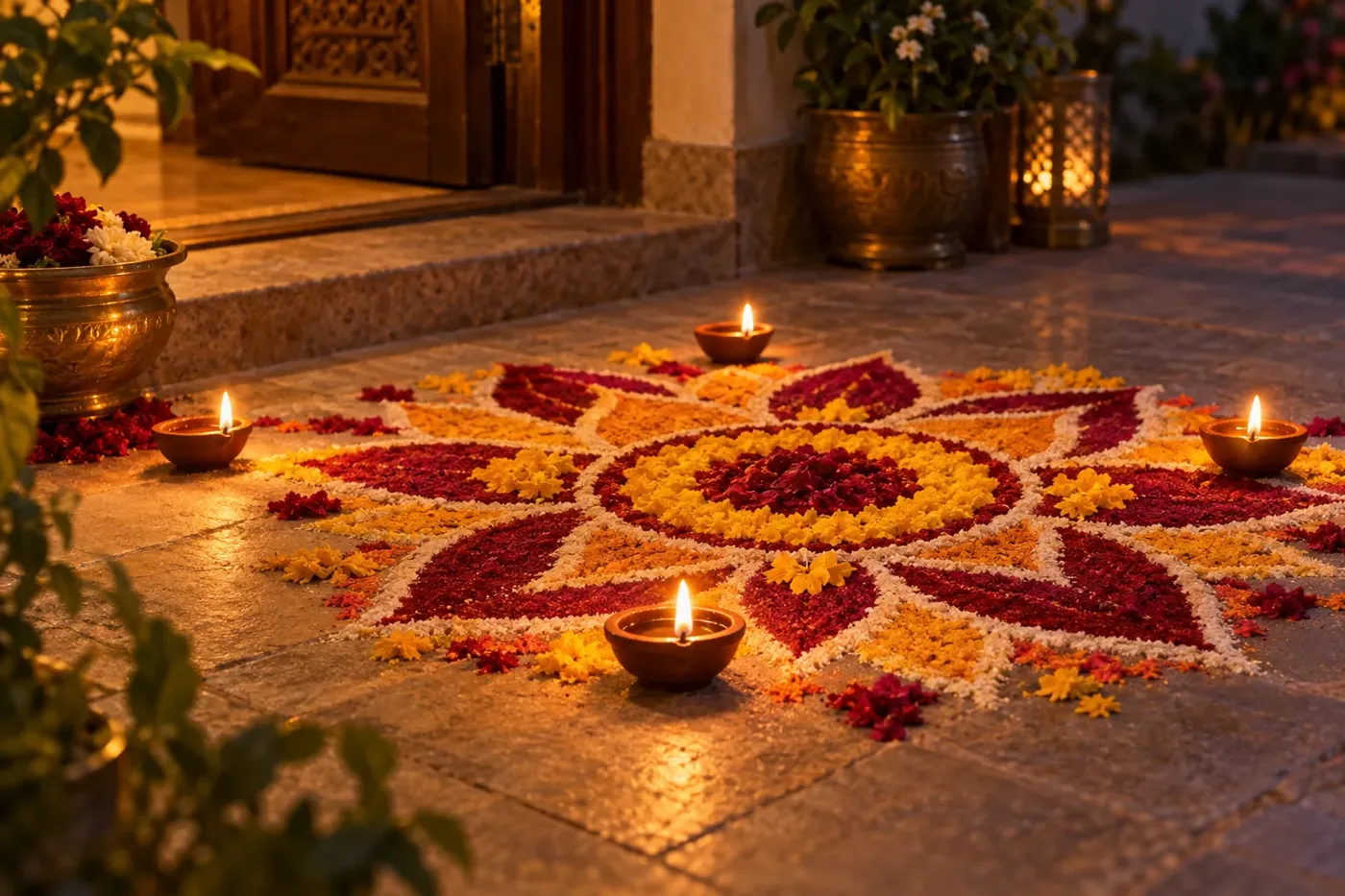
Diwali (Deepavali) Dates 2024–2030
| Year | Gregorian Date | Detail Page |
|---|---|---|
| 2024 | November 1, 2024 | 2024 guide → |
| 2025 | October 21, 2025 | 2025 guide → |
| 2026 | November 8, 2026 | 2026 guide → |
| 2027 | October 29, 2027 | 2027 guide → |
| 2028 | October 17, 2028 | 2028 guide → |
| 2029 | November 5, 2029 | 2029 guide → |
| 2030 | October 26, 2030 | 2030 guide → |
Significance
Diwali, also spelled Deepavali, is the most widely celebrated festival in the Hindu calendar and one of the largest cultural festivals in the world. The name derives from the Sanskrit dipavali, meaning a row of lights. The festival falls on the night of the new moon (amavasya) of the Hindu lunar month of Kartika and stretches into a five-day celebration. The most popular legend connected to Diwali is the return of Lord Rama to Ayodhya after fourteen years of exile and his victory over the demon king Ravana in Lanka, an event the citizens commemorated by lighting clay lamps to dispel the darkness. South Indian traditions emphasize Krishna's defeat of the demon Narakasura, while in Bengal the festival is associated with the worship of Goddess Kali and in Jainism with the attainment of moksha by Mahavira.
Traditions
Households are cleaned and decorated weeks in advance, financial accounts are closed and reopened on Lakshmi Puja, and elaborate rangoli designs are drawn in colored powders, flower petals, or rice flour at every doorway. The five days are observed sequentially as Dhanteras (worship of Lakshmi and the purchase of metal vessels), Naraka Chaturdashi or Chhoti Diwali, the main Diwali night with Lakshmi Puja and the lighting of diyas, Govardhan Puja or Annakut, and Bhai Dooj for the bond between sisters and brothers. Sweets including kaju katli, gulab jamun, ladoo, and barfi are exchanged with neighbors, new clothes are worn, and homes are illuminated with strings of electric lights, oil lamps, and candles.
Regional Observance
In North India the festival celebrates Rama's return; in West Bengal and Odisha it honors Goddess Kali in Kali Puja; in Maharashtra it includes the unique Vasubaras observance for cattle; in Gujarat it serves as the Hindu New Year with Bestu Varas; in Tamil Nadu it is largely centered on Naraka Chaturdashi morning rituals. The Sikh community observes Bandi Chhor Divas on Diwali to mark Guru Hargobind's release from imprisonment in 1619. Jain communities mark Lord Mahavira's attainment of nirvana. The Buddhist Newar community of Nepal observes Swanti or Tihar with Kukur Tihar (worship of dogs), Gai Tihar (cows), and Bhai Tika.
More Hindu Festivals
- Holi
The Festival of Colors celebrating spring and the triumph of good.
- Navratri (Sharad)
Nine nights honoring the goddess Durga in her nine forms.
- Dussehra (Vijayadashami)
Victory of Lord Rama over Ravana, the tenth day after Navratri.
- Makar Sankranti
Solar festival marking the sun's transition into Capricorn.
- Krishna Janmashtami
The birth of Lord Krishna, eighth avatar of Lord Vishnu.
- Ram Navami
The birth of Lord Rama, seventh avatar of Lord Vishnu.