Islamic Holiday · 2027 · All Years Guide
Laylat al-Qadr (Night of Power) 2027
The Night of Decree, when the Qur'an was first revealed.
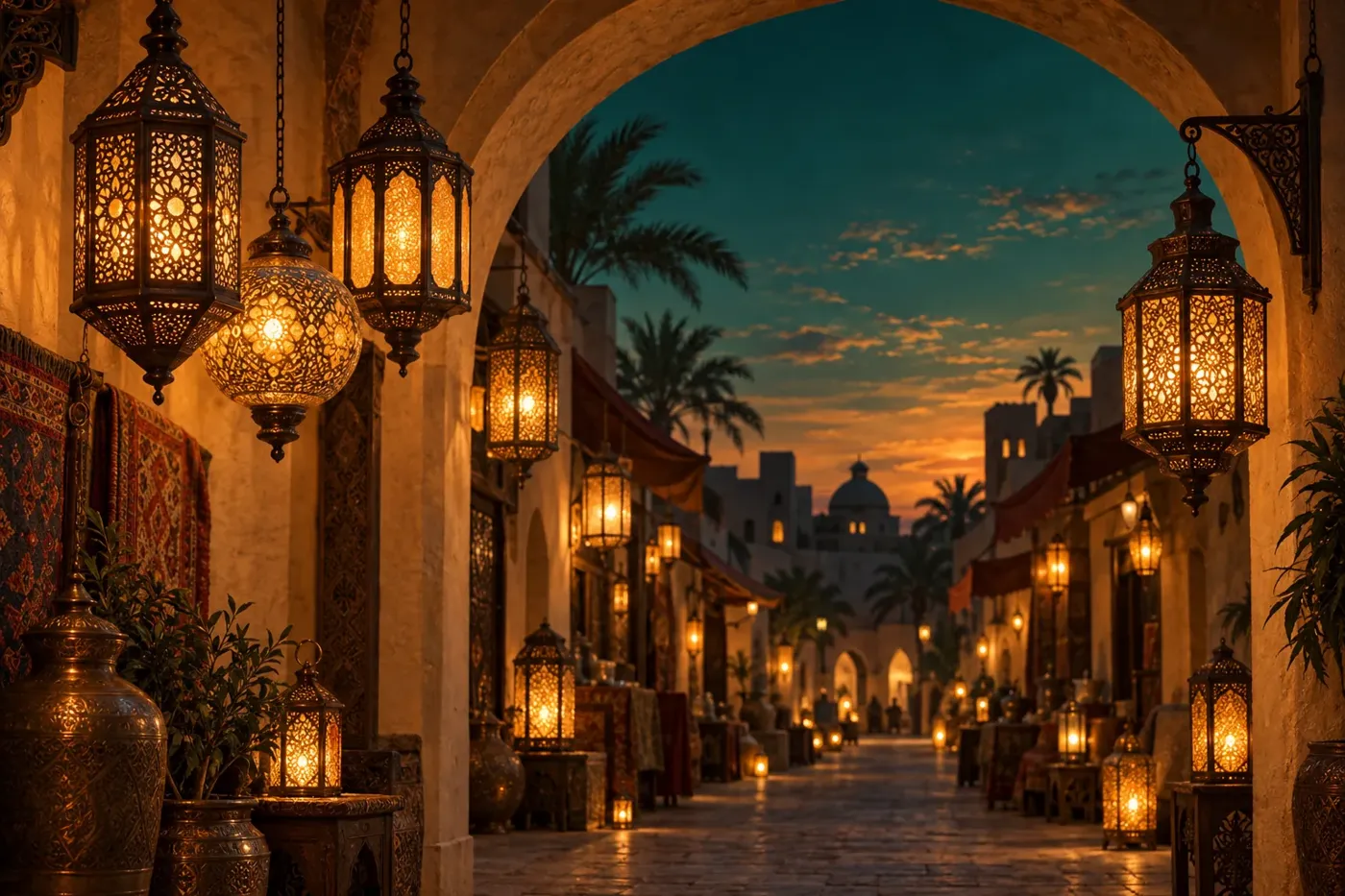
In 2027, Laylat al-Qadr (Night of Power) falls on Friday, March 5, 2027, corresponding to 27 Ramadan 1448 in the Islamic Hijri calendar. The exact start may shift by one day in either direction based on regional moon-sighting committee announcements — countries that follow the Saudi Umm al-Qura calculation typically align with the date listed here, while South Asian moon-sighting traditions occasionally observe the festival one day later.
Significance of Laylat al-Qadr (Night of Power)
Laylat al-Qadr, often translated as the Night of Power or Night of Decree, is described in Surah al-Qadr (Qur'an 97) as "better than a thousand months." It commemorates the night the Qur'an's first revelation descended upon Prophet Muhammad ﷺ in the cave of Hira on Mount Nur outside Mecca. Although the precise date is not specified in scripture, hadith literature directs believers to seek it among the odd-numbered nights of the last ten of Ramadan, with the 27th night being the most widely observed across the Muslim world. The night is said to carry such immense spiritual reward that worship performed during these hours surpasses the equivalent of more than eighty-three years of devotion.
Traditions and Observances
Devotees engage in I'tikaf, a spiritual seclusion in the mosque during the final ten days of Ramadan, leaving only for absolute necessities. The night itself is spent in prolonged Qiyam al-Layl prayers, recitation of the Qur'an, dua supplications, and dhikr. The supplication taught by the Prophet to Aisha — "Allahumma innaka 'Afuwwun, tuhibbul 'afwa fa'fu 'anni" (O Allah, You are Most Forgiving and You love forgiveness, so forgive me) — is repeated throughout the night. Many mosques organize complete Qur'an recitations and offer iftar and suhoor for those staying.
Laylat al-Qadr (Night of Power) 2027 — At a Glance
If you are planning travel, scheduling community events, requesting time off work, or simply marking your family calendar for 2027, the table below summarises every key detail for Laylat al-Qadr (Night of Power) this year, alongside the surrounding observances on either side of the festival in the Hijri calendar.
| Detail | 2027 |
|---|---|
| Gregorian date | March 5, 2027 |
| Day of week | Friday |
| Hijri date | 27 Ramadan 1448 |
| Tradition | Islam (Sunni & Shia observance noted where they differ) |
Regional Observance
In Mecca and Medina, hundreds of thousands gather in the Grand Mosque and the Prophet's Mosque for nightlong worship that is broadcast worldwide. In Turkey, the night is called "Kadir Gecesi" and is marked by mosque illuminations called mahya. Indonesian and Malaysian families often visit ancestral graves the following morning and distribute charity to neighbors. In South Asia, special Nafl prayers are offered in two-rakat units throughout the night, and many bring children to mosques to introduce them to the practice.
Laylat al-Qadr (Night of Power) Across the Years 2024–2030
The Islamic Hijri calendar is a purely lunar calendar of approximately 354 days, so its observances drift forward by roughly 10–11 days each Gregorian year. The Hindu lunar calendar uses periodic intercalary months (adhik maas) that keep festivals broadly anchored to the seasons. The table below shows the Gregorian date of Laylat al-Qadr (Night of Power) across every year Festive Dates covers, allowing you to plan multi-year commemorations, anniversaries, or research at a glance.
| Year | Gregorian date | Hijri date | Day |
|---|---|---|---|
| 2024 | April 6, 2024 | 27 Ramadan 1445 | Saturday |
| 2025 | March 26, 2025 | 27 Ramadan 1446 | Wednesday |
| 2026 | March 16, 2026 | 27 Ramadan 1447 | Monday |
| 2027 | March 5, 2027 | 27 Ramadan 1448 | Friday |
| 2028 | February 22, 2028 | 27 Ramadan 1449 | Tuesday |
| 2029 | February 10, 2029 | 27 Ramadan 1450 | Saturday |
| 2030 | January 31, 2030 | 27 Ramadan 1451 | Thursday |
How Festive Dates calculates Laylat al-Qadr (Night of Power) 2027
Our Hijri-to-Gregorian conversions follow the calculation methodology used by the Aladhan Islamic Calendar API, which itself draws from the Umm al-Qura calendar of Saudi Arabia for religious observances. For festivals tied to lunar crescent observation — particularly the start of Ramadan, Eid al-Fitr, Eid al-Adha, and Hijri New Year — the actual observed date in any given country may differ by one day based on local moon-sighting committee determinations. We list the most widely observed Sunni date here; Shia communities typically follow Ja'fari calculation methodology that may differ by a day. Always confirm with your local masjid or central religious authority before finalising community plans.
Other Years
- Laylat al-Qadr (Night of Power) 2024 Apr 6, 2024
- Laylat al-Qadr (Night of Power) 2025 Mar 26, 2025
- Laylat al-Qadr (Night of Power) 2026 Mar 16, 2026
- Laylat al-Qadr (Night of Power) 2028 Feb 22, 2028
- Laylat al-Qadr (Night of Power) 2029 Feb 10, 2029
- Laylat al-Qadr (Night of Power) 2030 Jan 31, 2030
Other Holidays in March 2027
- Eid al-Fitr 2027 Mar 9, 2027
- Holi 2027 Mar 22, 2027
- Maha Shivaratri 2027 Mar 6, 2027